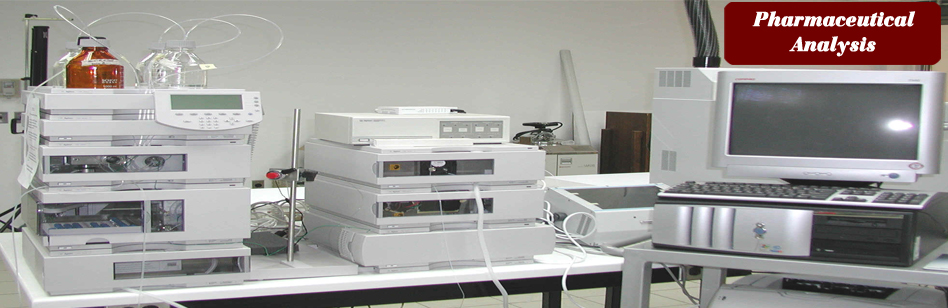
A simple, rapid and stability-indicating reverse-phase high-performance liquid chromatography (RP-HPLC) method was developed and validated for the quantitative estimation of Vismodegib in pharmaceutical capsule dosage forms. Chromatographic separation was achieved on an Inertsil C18 column (150 × 4.6mm, 5μm) using a mobile phase consisting of 0.01 N ammonium phosphate buffer and acetonitrile in the ratio of 55:45 (v/v), delivered at a flow rate of 0.9mL/min. Detection was carried out at 258nm with a total run time of 6 minutes. The method showed a retention time of approximately 2.56 minutes for Vismodegib. Validation was performed in accordance with ICH Q2(R1) guidelines. The method demonstrated excellent linearity over the concentration range of 7.5-45μg/mL with a correlation coefficient (R2) of 0.999. Precision and accuracy studies showed %RSD values below 2% and recovery between 98.0% and 102.0%, respectively. The limit of detection (LOD) and limit of quantification (LOQ) were found to be 0.16μg/mL and 0.48μg/mL, respectively, indicating good sensitivity. Robustness studies confirmed that minor variations in chromatographic conditions did not significantly affect the results. Forced degradation studies under acidic, alkaline, oxidative, thermal, photolytic and neutral conditions demonstrated that the method is stability-indicating, with effective separation of degradation products from the analyte peak. The validated method was successfully applied to the assay of marketed Vismodegib capsules, yielding an assay value of 99.66%. The proposed RP-HPLC method is simple, precise, accurate, robust and suitable for routine quality control and stability analysis of Vismodegib in pharmaceutical formulations.
Sulfur-containing peptide drugs such as Vasopressin, Oxytocin, Calcitonin, Lanreotide and Octreotide are susceptible to the formation of parallel and antiparallel disulfide-linked dimers during synthesis, which poses significant challenges for impurity identification, process control and regulatory evaluation. In the present study, vasopressin was employed as a model peptide to develop a novel, safe and scalable synthetic process for the selective preparation of these impurities. The strategy is based on an orthogonal Trt/Acm cysteine protection scheme combined with 2, 2′-dithiodipyridine-mediated thiol activation, enabling controlled and sequential disulfide bond formation under mild reaction conditions. The process avoids hazardous reagents and allows reproducible gram-scale synthesis of the target dimers with high purity and yield. This method provides a practical and industrially relevant approach for the preparation and characterization of disulfide-linked vasopressin impurities, supporting pharmaceutical analysis, impurity profiling and API quality control requirements.